Saving Praise Houses Before Their African Lineage Is Forgotten
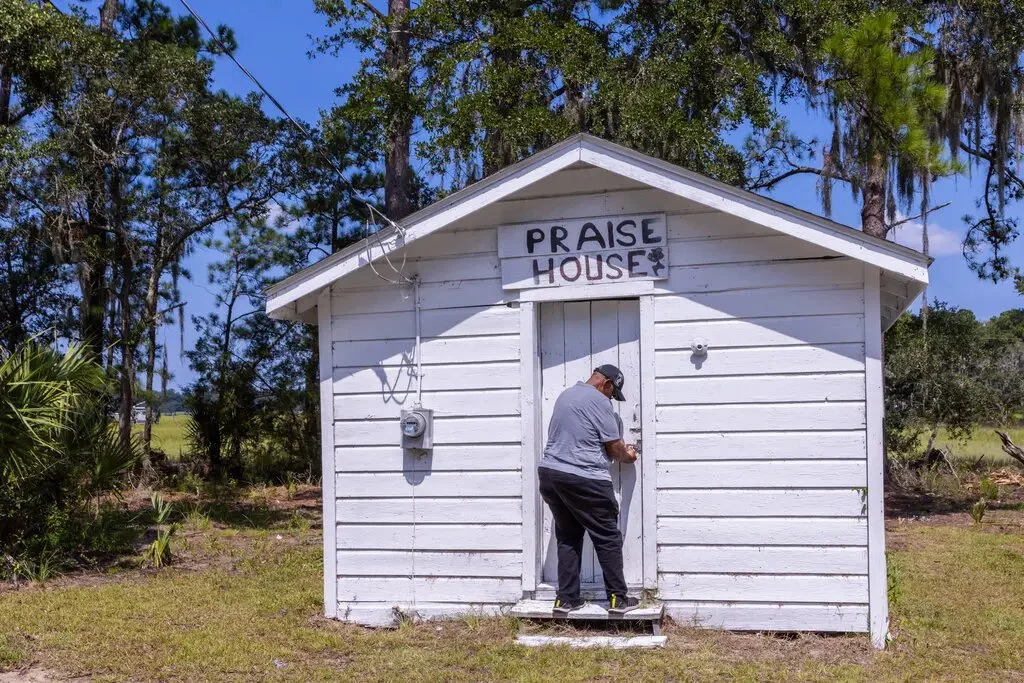
James Peter Smalls, a deacon, at the Mary Jenkins Praise House on St. Helena Island, S.C. Smalls pays the monthly bills.Credit...Candace Dane Chambers for The New York Times
The Gullah Geechee fight to preserve the tiny structures, a cradle of the Black church, before they’re erased by sprawl, climate change and fading memories.
Excerpt from New York Times Article, Saving Praise Houses Before Their African Lineage Is Forgotten, Written by Patricia Leigh Brown. The writer traveled to seven praise houses in South Carolina and Georgia, along the Gullah Geechee Corridor. Nov. 23, 2023
The Rev. Kay Colleton will never forget the time she first laid eyes on Moving Star Hall, a tiny white clapboard building with a leaning chimney, a crooked roof and a storied history. The hall is a rare surviving example of a praise house — humble one-room structures used as places of worship by enslaved people on coastal plantations throughout the Carolinas and Georgia. They have been providing spiritual sustenance for generations of African Americans ever since.
“There were no keys, so we just came right in,” Pastor Kay recalled of that day in 1989. “It was in a state of barrenness. I’ll be honest: I said to the Lord, ‘You’ve got to be kidding.’”
Pastor Kay and her church, Manna Life Center, on Johns Island, S.C., vowed to breathe new life into the hall. And on a hot and humid day last summer, rife with tiny no-see-ums — and the ubiquitous hand-held straw fans in these parts providing little relief — about a dozen longtime congregants of Moving Star Hall came together for prayer, song and reflection. All of them were Gullah Geechee, whose enslaved ancestors had been abducted from west and central Africa; and their knowledge of rice cultivation and other crops was used to generate incomparable wealth for this region’s brutal white planters.
Alive and hopping, Moving Star Hall is an outlier among the handfuls of praise houses still standing in varying states of repair, most tucked away on rural roads through dark tunnels of oaks laden with Spanish moss…